Electric Tilt Table for Rehabilitation: Adjustable Positioning
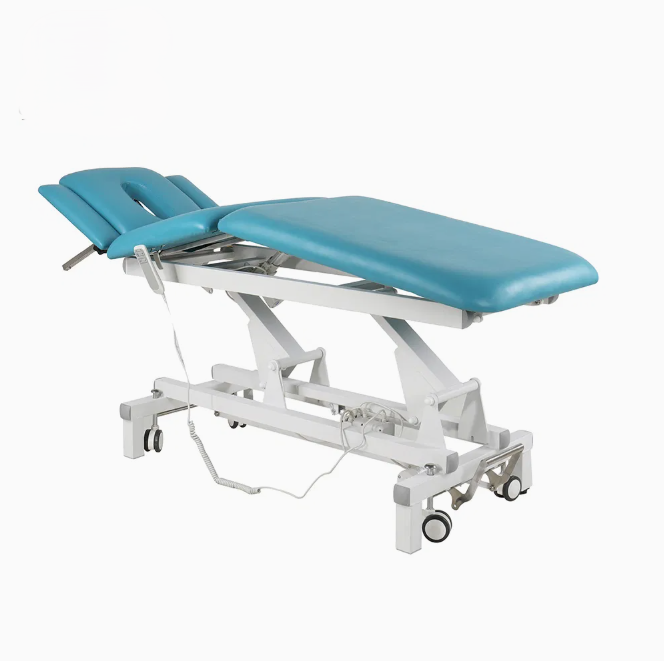
The Nlive ElectricTilt Table is a rehabilitation table designed to support training for patients who are unable to bear their own body weight on their lower limbs. It tilts up to 90 degrees and can be held at different angles to support rehabilitation training, strength work and balance re-education. The product page identifies the model as item EB.
Tilt up to 90 Degrees for Progressive Positioning
The table can be tilted up to 90 degrees and positioned at angles to meet the needs of rehabilitation training. This allows clinicians to select a position suited to the patient and the session’s goals. The manufacturer describes its use for patients who cannot load their lower limbs independently.
Rehabilitation and Balance Re-Education Applications
The manufacturer lists hemiplegia, paralytic stroke, postural hypotension associated with prolonged bed rest, postural hypotension associated with early spinal cord injury, myasthenia and cardiovascular disease among example patient situations. These are product-use examples from the manufacturer, not a substitute for clinical assessment or treatment guidance.
Supine and Prone Use for Adults and Children
The Nlive Tilt Table can be used in both supine and prone positions, and is intended for adults and children. Clinicians should determine whether a specific patient and configuration are suitable for use.
Who May Use the Nlive Tilt Table?
The manufacturer positions the table for rehabilitation settings working with patients who need supported positioning and progressive rehabilitation training. Clinical suitability should be determined by a qualified clinician for each patient.
Quantity
Frequently Asked Questions
How far can the NliveTilt Table tilt?
The manufacturer says it tilts up to 90 degrees and can stay at an angle to suit rehabilitation training needs.
Can it be used in prone and supine positions?
Yes. The product description says it can be used in both positions.
Is it intended for adults and children?
The manufacturer states that it can be used for adults and children. Confirm configuration and patient suitability with the supplier and clinician.
What rehabilitation uses does the manufacturer describe?
The manufacturer describes rehabilitation training, strength training and balance reeducation for people unable to load their lower limbs. Its examples include hemiplegia, paralytic stroke and certain causes of postural hypotension.
RELATED PRODUCTS